
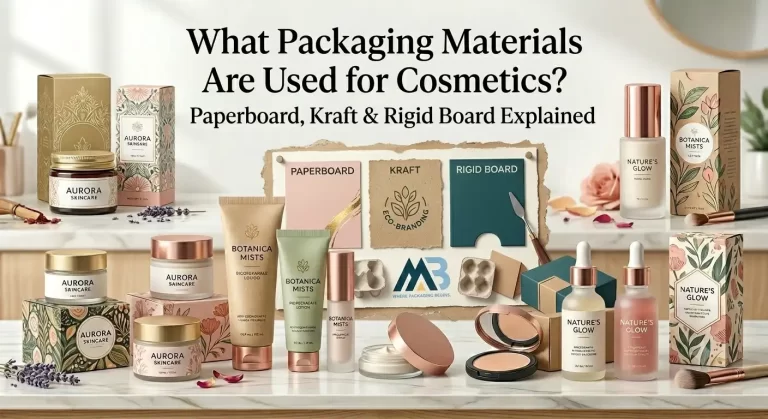
When a cosmetic founder prepares to launch a new product, packaging is usually one of the first real-world production decisions they face. Before formulas hit shelves or ads go live, there’s a physical box that must protect, present, and position the product in the customer’s hands. And that box starts with one critical choice: material.
Understanding cosmetic packaging materials isn’t just a manufacturing detail; it directly impacts brand perception, shipping durability, sustainability claims, and even customer trust. A luxury serum packed in a flimsy board sends a very different message than the same product in a rigid, well-structured carton.
In this guide, we’ll break down the three most widely used cosmetic packaging materials- paperboard, kraft, and rigid board- in a practical, founder-friendly way. It’s part of our complete guide to choosing custom packaging for your cosmetic brand, which covers everything from materials to suppliers and MOQ strategy.
No jargon overload, just clear insight from a packaging production perspective so you can make informed decisions before placing your first order.
Why Packaging Material Choice Matters More Than You Think
In cosmetics, packaging is not just a container; it’s part of the product experience. Customers often judge quality within seconds of picking up a box. That first tactile impression influences perceived value, even before they try the formula inside.
From a production standpoint, packaging materials also affect:
- Shipping safety like crushing, bending, and moisture resistance
- Printing quality, e.g., how sharp your branding appears
- Cost per unit is critical for startups scaling batches
- Sustainability profile: recyclability and consumer perception
- Shelf impact, like how your product competes visually in retail or e-commerce
This is why founders often spend more time than expected researching packaging substrates. The good news? Once you understand the core materials, the decision becomes much simpler and more strategic.
Understanding Core Cosmetic Packaging Materials
The world of cosmetic boxes may seem diverse, but most folding cartons and rigid boxes fall into three main categories:
- Paperboard like SBS/C1S/C2S types
- Kraft paperboard
- Rigid board, also called chipboard or greyboard structure
Each material has its own personality, strengths, and ideal use case. Choosing correctly depends on your brand positioning, budget, and product type.
Let’s break them down in detail.
Paperboard: The Industry Standard for Cosmetic Cartons
Paperboard is the most commonly used material in cosmetic packaging. If you’ve ever purchased a serum, lipstick, or skincare product in a folding carton box, chances are it was paperboard.
It’s a lightweight yet sturdy material made from compressed layers of paper pulp. In the cosmetic industry, it usually comes in three popular finishes:
- SBS (Solid Bleached Sulfate): Bright white, premium feel, excellent for printing
- C1S (Coated One Side): Glossy on one side, cost-effective branding option
- C2S (Coated Two Sides): Premium finish on both sides, used for luxury cartons
Why Brands Choose Paperboard
Paperboard is popular because it strikes a balance between cost and presentation. It supports high-resolution printing, embossing, foil stamping, and soft-touch lamination, making it ideal for branding-heavy packaging.
From a structural perspective, it is:
- Flexible for folding carton designs
- Easy to die-cut into custom shapes
- Lightweight for shipping efficiency
- Compatible with most cosmetic product sizes
Where It Works Best
Paperboard is ideal for:
- Skincare serums and creams
- Lipsticks and lip balms
- Sheet masks and small cosmetic kits
- Entry-level and mid-range beauty products
However, it’s important to note that paperboard alone does not offer high crush resistance. That’s why inserts or internal supports are often used for fragile products like glass bottles.
Kraft Board: The Natural, Eco-Focused Choice
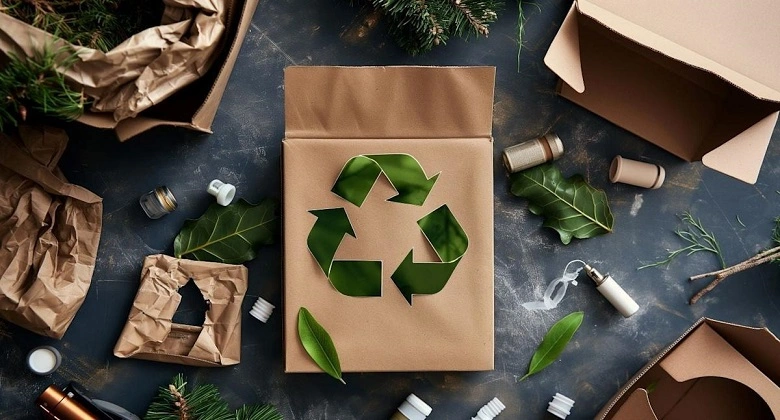
Kraft board has become increasingly popular in the clean beauty and sustainable packaging movement. Made from unbleached wood pulp, it has a natural brown tone that communicates eco-friendliness and simplicity.
Unlike paperboard, kraft is not heavily processed or coated, which gives it a raw, organic aesthetic.
Key Characteristics of Kraft Packaging
- Natural brown appearance (though it can be bleached for white kraft variants)
- High tear resistance compared to standard paperboard
- Excellent recyclability and biodegradability
- Slightly textured surface that absorbs ink differently
Branding with Kraft Material
Kraft packaging is often associated with:
- Organic skincare brands
- Handmade or artisanal cosmetics
- Vegan and cruelty-free product lines
- Minimalist branding styles
Printing on kraft requires thoughtful design. Because the surface is naturally darker, colors appear muted unless white ink or special coatings are used. Many brands embrace this limitation as part of their identity.
Practical Considerations
While kraft is eco-friendly and visually appealing, it does have constraints:
- Limited vibrancy in color printing
- Not ideal for ultra-luxury glossy finishes
- Slightly less smooth surface for fine detailing
Still, for brands focusing on sustainability storytelling, kraft is one of the strongest packaging choices available today.
Rigid Board: The Luxury Packaging Standard
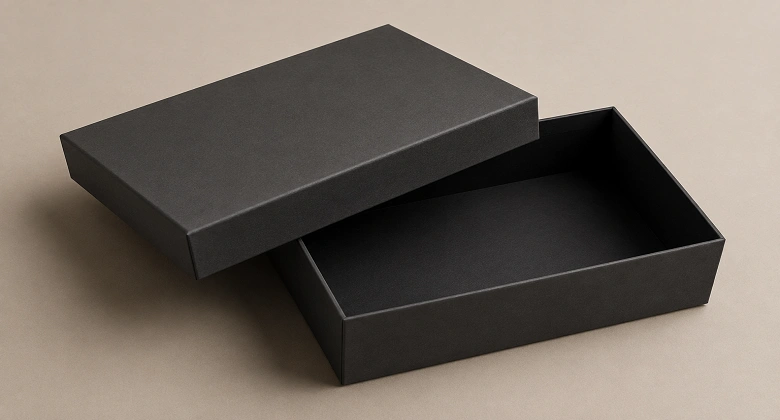
Rigid board is the heavyweight champion of cosmetic packaging. Unlike folding cartons, rigid boxes are made from thick chipboard wrapped in printed or specialty paper. This creates a sturdy, high-end box that does not collapse.
If paperboard is the everyday standard, rigid board is the luxury experience.
Why Rigid Packaging Feels Premium
Rigid boxes communicate value through structure alone. The moment a customer lifts the box, the weight and resistance signal quality.
Key features include:
- Thick internal chipboard (often 800–1500 gsm)
- Wrapped with specialty paper, kraft, or printed sheets
- High resistance to crushing and deformation
- Premium unboxing experience
Where a Rigid Board is Used in Cosmetics
Rigid packaging is typically used for:
- Luxury skincare sets
- Perfume gift boxes
- Subscription beauty kits
- High-end cosmetic launches
Brands often use rigid boxes for “hero products”, items meant to create a strong first impression or giftable experience.
Customization Potential
Rigid packaging allows for advanced enhancements such as:
- Magnetic closures
- Ribbon pulls
- Foam inserts or velvet interiors
- Spot UV, foil stamping, and embossing
These elements elevate packaging from functional to experiential, which is why luxury beauty brands rely heavily on rigid structures.
Comparing Paperboard, Kraft, and Rigid Board in Real Use
To understand these materials better, think of them as three tiers in cosmetic packaging:
- Paperboard: Practical, versatile, brand-friendly
- Kraft: Natural, eco-conscious, minimalist
- Rigid board: Premium, structural, experience-driven
Each serves a different business goal rather than competing directly.
Paperboard dominates mass production because it is cost-efficient and highly customizable. Kraft appeals to sustainability-focused branding. Rigid board is reserved for high perceived value and gift-ready presentation.
When founders compare materials, they’re often balancing three key factors:
- Budget per unit
- Brand positioning
- Product protection needs
There is no “best” material universally,only the best fit for a specific product strategy.
Paperboard Vs Kraft Beauty Boxes In Real Branding Decisions

When founders debate paperboard vs kraft beauty boxes, the decision usually comes down to brand identity rather than structural performance alone.
Paperboard gives you full creative freedom. You can print vibrant gradients, metallic effects, and photographic visuals that instantly attract attention on retail shelves. It’s ideal for brands that rely on strong visual storytelling.
Kraft, on the other hand, communicates honesty and environmental responsibility. It is less about visual complexity and more about authenticity. Many indie skincare brands use kraft to signal “clean ingredients, clean packaging.”
Here’s the real-world tradeoff: