
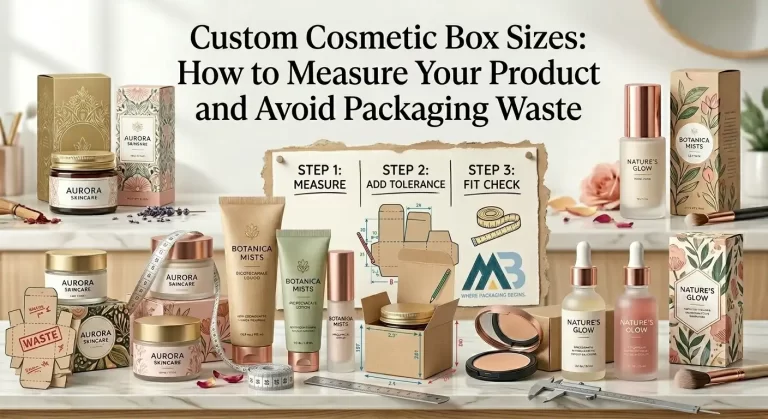
Packaging decisions in the beauty industry are often underestimated. Many founders spend weeks perfecting formulations, branding, and marketing, but treat packaging as a final step that can be solved quickly with a standard box size. This approach is one of the most common reasons for unnecessary costs, product damage, and wasted material at scale.
The reality is simple. Packaging is not just a container. It is a cost driver, a protection system, and a customer experience tool all at once. When sizing is wrong, every shipment becomes more expensive than it should be, and every unboxing experience becomes less reliable.
Global data consistently shows the scale of the issue. The United Nations Environment Programme has reported that packaging waste is one of the fastest growing categories of solid waste worldwide, driven largely by consumer goods and ecommerce expansion. In beauty, where packaging is often multi layered, the impact is even more pronounced.
This guide explains how to correctly size cosmetic packaging, how to avoid common mistakes, and how to think like a packaging engineer instead of guessing box dimensions.
Why Box Sizing Matters More Than Most Founders Think
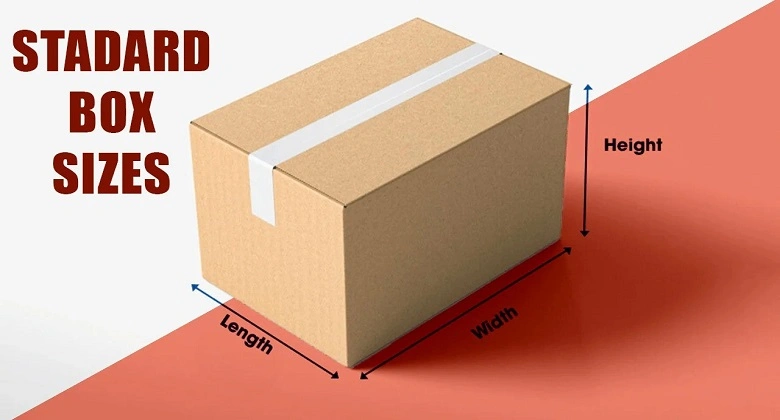
When brands think about packaging, they usually focus on aesthetics, foil stamping, matte finishes, embossing. But logistics quietly determines profitability.
Oversized boxes create three major problems:
1. Increased shipping cost
Carriers like DHL, FedEx, and UPS use dimensional weight (DIM weight), meaning you’re charged based on volume, not just actual weight. A box that is 20% larger than necessary can significantly increase per-unit shipping cost.
2. Higher damage rates
Contrary to intuition, “more space” does not mean “more protection.” Excess space allows products to shift, increasing breakage risk during transit.
3. Environmental inefficiency
Research from the Ellen MacArthur Foundation highlights that nearly 20% of packaging waste could be eliminated through better design and right-sizing systems. Oversized packaging is one of the most avoidable contributors.
Step 1: Understand Your Product’s True Dimensions
Most sizing mistakes happen because founders measure the product incorrectly.
Here’s the correct approach:
Measure the product in three stages:
-
-
Primary Product Size
-
This is the item itself e.g., serum bottle, lipstick tube, jar
-
-
Closure and Cap Allowance
-
Many bottles are taller when capped than expected
-
-
Protective Accessories
-
Pumps, droppers, applicators, inserts
For example:
A 30ml glass dropper bottle may measure:
-
- Body height: 85 mm
- Dropper cap: +25 mm
- Total: 110 mm
If you forget the cap height, your packaging will be too short and force compression or redesign later.
Step 2: Add “Buffer Space” Strategically
A good packaging fit is not “exact fit.” It is “controlled fit.”
Industry packaging engineers typically use:
- 3–5 mm buffer for tight luxury packaging
- 5–10 mm buffer for standard ecommerce shipping)
- 10–15 mm buffer for fragile glass or multi-item kits
This buffer is not empty waste, it is engineered tolerance for vibration, impact, and packing variability.
But here is the key insight:
Too many brands add buffers in all directions blindly, which leads to oversized boxes and inflated shipping costs.
Instead, buffer space should be directional:
- Height buffer for cap clearance
- Side buffer for insert protection
Minimal front/back buffer if inserts are used
Step 3: Design Around Packaging Structure, Not Just Product Size
A box is not just a container, it is a structure that carries load differently depending on design.
There are three common cosmetic packaging formats:
1. Straight tuck end boxes
Best for lightweight skincare items like lip balms or small tubes.
2. Rigid boxes
Rigid Boxes used for luxury cosmetics and gift sets. These require precise internal sizing because they do not compress.
3. Mailer boxes
Best for subscription boxes or ecommerce shipping; they include natural cushioning from flaps.
Each structure behaves differently under stress, which affects how you size internal dimensions.
For example:
A rigid box with 2 mm extra space feels “loose,” but the same tolerance in a mailer box may be acceptable due to corrugation cushioning.
Step 4: Reduce Waste Using Insert-First Design Thinking
One of the most overlooked strategies in packaging optimization is designing inserts before final box dimensions.
Instead of:
| Wrong Approach | Right Approach |
|---|---|
|
Product → Box → Fill gaps with filler material |
Product → Insert → Box sized around insert |
|
Creates void space, higher shipping costs, product movement |
Eliminates void space, reduces costs, prevents movement |
|
Reactive- fix problems after they appear |
Proactive- engineer the fit from the start |
Custom inserts like EVA foam, cardboard cutouts, molded pulp allow you to reduce unnecessary internal void space by up to 40–60% depending on product complexity.
This approach is widely used in premium skincare brands because it:
- Prevents movement
- Reduces packaging material usage
- Enhances unboxing experience
Step 5: Real-World Example Like Skincare Brand Launch Mistake
This example shows how incorrect assumptions in “cosmetic box sizes” can scale into serious financial and operational losses when a brand moves from small testing batches to mass production.
A startup launching a vitamin C serum line placed an initial order of 10,000 units of packaging based on estimated measurements and a loosely calculated buffer space. At the time, the decision seemed reasonable because the product fit inside the box visually during early sampling. However, the sizing was not based on engineered measurement or controlled tolerance design.
The issue started with a simple miscalculation in dimensional planning. The bottle height was 120 mm, but the internal box height was designed at 150 mm. This created an unnecessary 30 mm of vertical empty space inside every single unit.
What Went Wrong in Detail
Excess Vertical Movement Space
That additional 30 mm void allowed the serum bottle to move freely inside the packaging during transit. Instead of being stabilized, the product was repeatedly shifting up and down as parcels were handled, stacked, and transported through courier networks.
Lack of Internal Support Structure
There was no insert or locking mechanism to hold the bottle in place. This meant that the packaging was relying entirely on empty space rather than structural support, which is a weak approach for fragile glass products.
Impact of Vibration During Shipping
In real logistics conditions, parcels are not static. They are exposed to constant vibration, sudden drops, and compression pressure. Over time, this movement caused stress on the glass neck and pump area of the bottle.
Results of the initial packaging decision
The consequences became visible quickly once shipping began at scale.
Product Damage Rate Increased Significantly
The brand experienced a 7 percent breakage rate in the first batch. For a skincare product with glass packaging, this was a major operational and financial setback.
Customer Experience Issues
Customers reported leaking bottles, loose pumps, and damaged units. In beauty ecommerce, packaging failure often gets attributed to product quality even when the formulation is not the issue.
Rising Fulfillment Costs
Because damaged units had to be replaced, reverse logistics and reshipping costs started increasing, further reducing margins on each sale.
Secondary Packaging Fix Increased Cost
To reduce damage, the brand introduced foam inserts after the fact. While this reduced movement, it also increased per unit packaging cost by 18 percent, creating a long term margin pressure that was not part of the original business model.
What Changed After Redesign
Once the issue was analyzed properly, the brand shifted from assumption based sizing to engineered packaging design.
Internal Height Correction
The box internal height was reduced from 150 mm to 132 mm. This immediately reduced unnecessary vertical movement space while still allowing safe tolerance for closure height and handling variation.
Introduction of Custom Molded Insert
Instead of relying on empty space, a molded insert was designed to lock the bottle in position. This ensured zero movement during transit, even under vibration and stacking pressure.
Stabilized Product Positioning
The bottle was no longer floating inside the box. It was held in a fixed position, which eliminated impact stress on fragile areas like the neck and pump.
Final Outcome After Optimization
After implementing the redesign:
-
- Breakage rate dropped from 7 percent to below 1.2 percent
- Shipping consistency improved across all regions
- Customer complaints related to packaging significantly decreased
- Secondary packaging costs stabilized instead of increasing per shipment
Key Learning for Beauty Founders
This case highlights a critical principle in packaging design. Oversizing is not a safety measure. It is often a hidden risk.
In cosmetic packaging, especially for fragile products like serums, correct cosmetic box sizes are not about giving extra space. They are about controlling movement through precision engineering.
A properly designed box does not rely on empty space to protect a product. It relies on structure, measurement accuracy, and controlled internal design.
This is why early stage brands that invest in accurate sizing and insert design systems almost always scale more efficiently than those that rely on guesswork or visual estimation.
Not sure what size is right for your product?
Make A Boxes provides free packaging consultation with every quote. We’ll help you engineer the right fit before you order. Get a free quote today.
Step 6: Align Packaging Size with Shipping Economics
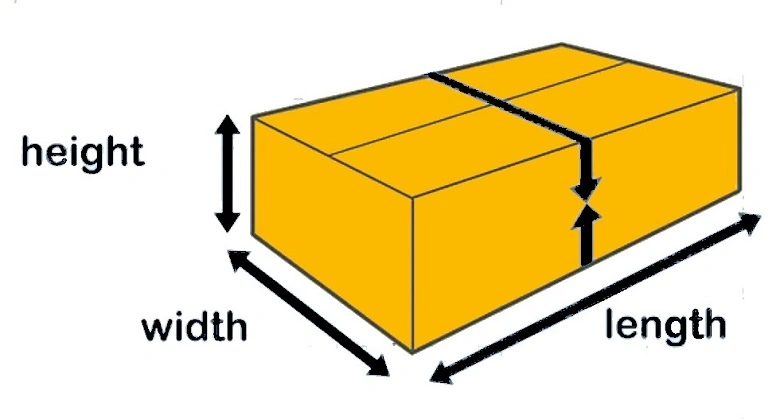
Packaging dimensions directly affect fulfillment cost.
Carriers calculate DIM weight using formulas like:
Length × Width × Height ÷ DIM divisor
Even small changes matter:
- Increasing box height by 2 cm can push a parcel into a higher pricing tier
- Bulk shipments amplify this across thousands of units
This is why logistics teams often push for “minimum viable packaging size” rather than “comfortable fit.”
Step 7: Sustainability and Consumer Perception
Modern beauty consumers are highly sensitive to waste. A 2023 McKinsey packaging report noted that over 60% of consumers consider sustainable packaging a key purchasing factor in beauty and personal care.
Oversized boxes create a “waste signal”:
-
- Too much filler paper
- Large box for small product
- Unnecessary plastic inserts
Right-sized packaging communicates efficiency, modern brand thinking, and environmental responsibility — and for beauty brands selling through retail channels, custom display boxes that are precisely sized to your product also improve shelf presence and reduce in-store packaging waste perception.
Step 8: A Simple Framework for Correct Sizing
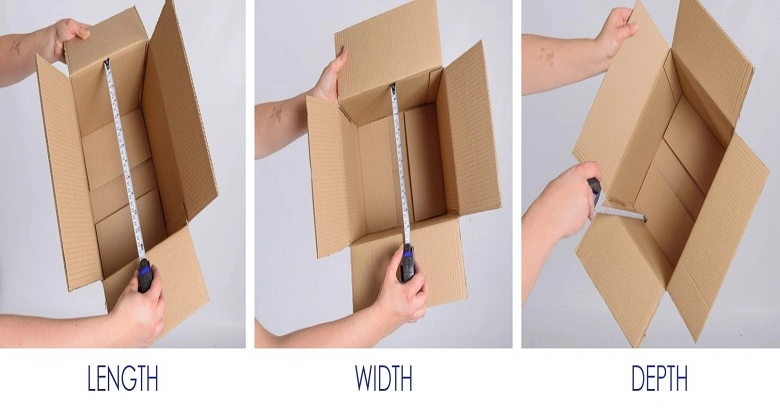
Once you have completed this sizing workflow, the next step is working with a packaging partner who can translate your measurements into production-ready custom cosmetic boxes that match your exact internal dimensions, material requirements, and brand finishes.
- Measure product in final assembled form
- Add controlled buffer (based on fragility)
- Design or select insert first
- Define internal box dimensions
- Adjust external dimensions for printing and structure
- Validate with physical prototype before bulk order
Skipping prototyping is one of the most expensive mistakes in packaging procurement.
Step 9: Common Mistakes To Avoid
Many packaging issues repeat across early stage brands.
Some founders round up dimensions too generously, which leads to oversized boxes. Others forget to include cap height, especially with pumps and droppers. Some design packaging before finalizing the product itself. Others reuse one box size for multiple SKUs without testing fit properly.
These decisions may seem small, but they often lead to higher shipping costs, damaged goods, and unnecessary redesigns later.
Step 10: Think Like A Systems Designer, Not A Box Buyer

The most successful beauty brands don’t treat packaging as an order, they treat it as a system.
A well-designed packaging system:
-
- Reduces per-unit shipping cost
- Minimizes damage rates
- Improves customer experience
- Reduces environmental footprint
- Scales efficiently across SKUs
This is where strategic packaging partners add value, not just by manufacturing boxes, but by guiding dimensional decisions early.
Final Takeaway
Correct cosmetic packaging is not guesswork. It is a balance between product protection, logistics efficiency, and brand perception.
When founders invest time in accurate sizing early, they avoid costly redesigns, reduce waste, and build a more scalable operational foundation.
If you are planning your first product launch or refining your current packaging system, focus less on “bigger is safer” and more on “precisely engineered fit.”
This guide is part of our complete series on how to choose custom packaging for your cosmetic brand.
That shift alone can materially improve margins and sustainability outcomes across your entire product line.
Ready to get your sizing right the first time?
Request a custom cosmetic packaging quote from Make A Boxes, with a low MOQ of 100 units and an 8–12 business day US turnaround.
Frequently Asked Questions
Cosmetic box sizes directly affect product safety, shipping cost, and customer experience. Incorrect sizing leads to damage, waste, and higher logistics expenses.
Measure the fully assembled product including caps, pumps, and droppers, then add controlled buffer space based on fragility and shipping conditions.
Oversized boxes increase shipping costs, allow product movement, raise breakage risk, and create unnecessary packaging waste and void fill usage.
No. Glass bottles, lipsticks, and multi product kits all require different internal sizing strategies based on fragility, movement, and structure.
Use precise measurements, design inserts before finalizing box size, avoid excess buffer space, and optimize packaging for shipping efficiency.