
Launching a cosmetic product is exciting, until you reach the packaging stage.
You’ve finalized your formula, invested in branding, ordered samples, and started planning your launch. Then your packaging supplier asks for dielines, print specifications, artwork files, bleed settings, and production-ready PDFs.
Suddenly, what seemed like a simple box becomes one of the most confusing parts of the entire process.
If you’re a first-time beauty brand owner, you’re not alone.
One of the biggest reasons cosmetic product launches get delayed isn’t formulation issues or manufacturing problems. It’s packaging files that aren’t ready for production. Brands often have a logo, product mockups, and a clear vision, but they don’t know how to translate those ideas into packaging that can actually be printed and assembled correctly.
If you’re still in the early planning stages, our complete guide on how to choose custom packaging for your cosmetic brand walks through every decision before diving into design files.
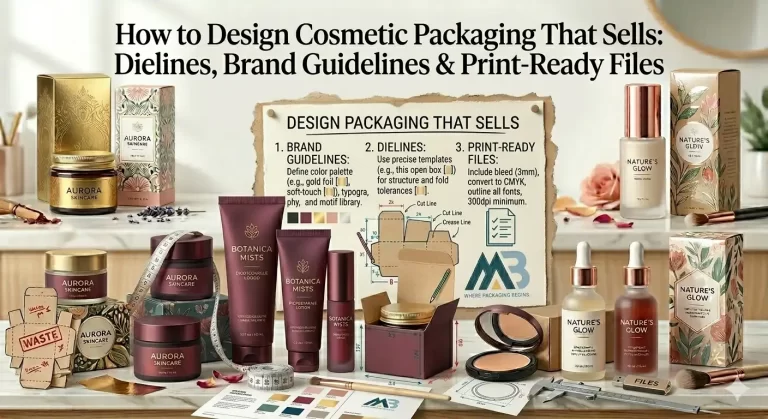
In this guide, we’ll walk through everything you need to know, from dielines and brand guidelines to print-ready files. So you can create cosmetic packaging that not only looks beautiful but also performs in the real world.
Why Packaging Is Often the First Product Customers Experience
In the beauty industry, customers judge your packaging before they judge your formula.
Think about the last time you purchased a skincare product, serum, lipstick, or beauty gift set. Chances are you noticed the packaging first. Before reading ingredients, checking reviews, or testing the product, your brain made an immediate judgment based on visual presentation.
That’s because packaging communicates quality, trust, positioning, and value within seconds.
For cosmetic brands, packaging serves multiple purposes:
- Protects the product
- Reinforces brand identity
- Creates shelf impact
- Influences purchase decisions
- Enhances perceived value
- Encourages social sharing
- Improves customer retention
Research from packaging industry studies consistently shows that packaging significantly influences consumer purchasing behavior. In an increasingly crowded beauty market, packaging has become one of the strongest differentiators available to brands.
Today, consumers don’t simply buy beauty products.
They buy experiences.
And packaging is often where that experience begins.
The Reality Most First-Time Beauty Brands Discover Too Late
Many cosmetic founders assume packaging design is simply creating attractive artwork.
In reality, packaging design is a combination of branding, engineering, manufacturing, compliance, and print production.
This is where many brands encounter expensive problems.
Common issues include:
- Incorrect box dimensions
- Missing bleed areas
- Low-resolution artwork
- RGB files instead of CMYK
- Improper logo placement
- Fold lines covering text
- Missing regulatory information
- Unsupported file formats
A design may look perfect on a computer screen but fail completely when it reaches the printing press.
This is why professional packaging design isn’t just about aesthetics; it’s about creating files that manufacturers can actually use.
Understanding Dielines: The Blueprint Behind Every Cosmetic Box
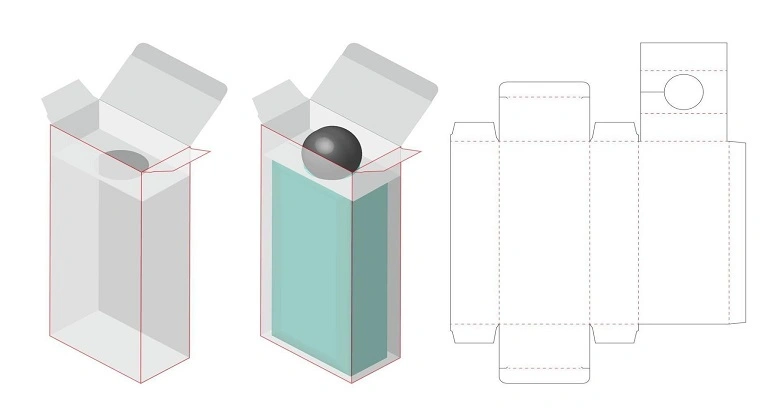
If packaging design were a building project, the dieline would be the architectural blueprint.
A dieline is a flat structural template that shows exactly where a package will:
- Be cut
- Be folded
- Be glued
- Be assembled
Every cosmetic box begins with a dieline.
Before artwork is added, manufacturers create the structural layout that determines how the packaging functions.
A typical cosmetic box dieline includes:
Cut Lines
These indicate where the material will be trimmed during production.
Fold Lines
These show where the packaging bends to create its final shape.
Glue Tabs
These identify areas that will be bonded during assembly.
Bleed Areas
Additional artwork extending beyond the trim edge.
Safe Zones
Areas where important text and logos should remain to avoid trimming issues.
Without these elements, printers cannot accurately manufacture the packaging.
Why Dielines Matter More Than Most Brands Realize
A poorly designed dieline can ruin an otherwise excellent packaging design.
Imagine placing your logo directly over a fold line.
When the box is assembled, the logo becomes distorted.
Or imagine positioning important product information too close to the trim edge.
A slight production shift could cut off critical details.
These aren’t rare mistakes.
They’re some of the most common issues packaging manufacturers encounter from new beauty brands.
This is why experienced designers always begin with structure before aesthetics.
Many startups use a cosmetic packaging design template during the early stages of development because it provides a practical foundation for layout planning and helps reduce costly production errors.
However, templates should never replace custom structural planning for final production.
Every product has unique dimensions, weight requirements, and retail considerations.
The Packaging Psychology Behind High-Selling Beauty Brands
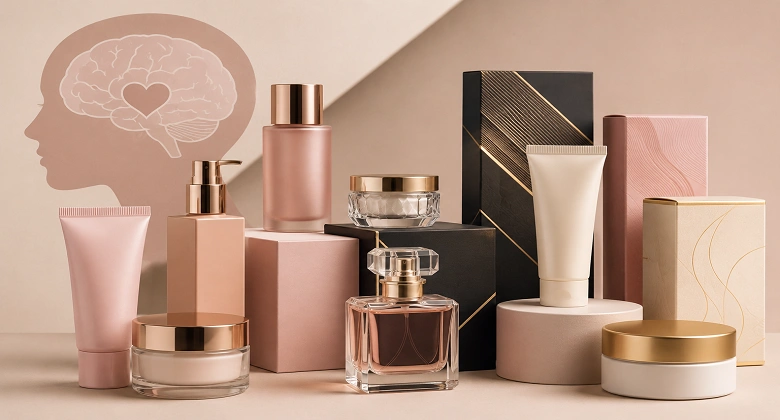
Great cosmetic packaging doesn’t happen by accident.
Every successful beauty brand carefully considers how customers perceive products visually.
Human beings naturally associate certain design elements with quality.
For example:
Minimalist Packaging Feels Premium
Luxury skincare brands often use clean layouts with generous white space because simplicity communicates confidence.
Matte Finishes Feel More Expensive
Soft-touch coatings create a tactile experience that consumers often associate with premium products.
Metallic Accents Signal Luxury
Gold, silver, rose gold, and holographic foils create visual sophistication.
Consistent Packaging Builds Trust
When every product follows the same visual system, customers perceive the brand as more established and reliable.
The goal isn’t simply to create attractive packaging.
The goal is to create packaging that aligns with customer expectations and strengthens purchasing confidence.
Building Strong Brand Guidelines Before Designing Packaging
One of the biggest mistakes beauty startups make is designing packaging without establishing brand guidelines first.
This often leads to inconsistencies across product lines.
Imagine launching:
- A serum box using gold typography
- A moisturizer using silver typography
- A cleanser using completely different fonts
The products may belong to the same company, but customers won’t immediately recognize them as part of the same brand family.
That’s where brand guidelines become essential.
Brand guidelines create consistency across every customer touchpoint.
What Cosmetic Packaging Brand Guidelines Should Include
Logo Standards
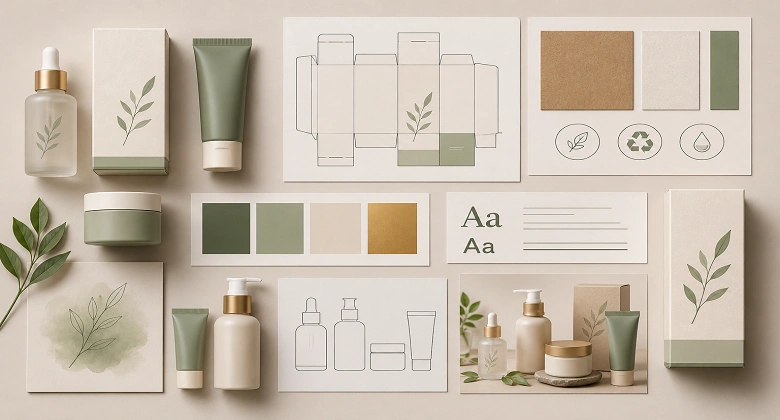
Your logo is one of the most recognizable elements of your brand, so it’s important to establish clear rules for how it should be used across all packaging. Brand guidelines should define the minimum logo size to ensure readability, approved logo variations for different applications, and clear-space requirements that prevent other design elements from crowding the logo.
It’s equally important to document incorrect usage examples, such as stretching, distorting, recoloring, or placing the logo on backgrounds that reduce visibility. These standards help maintain a professional and consistent brand presence across every product in your lineup.
Color Systems
Color consistency is essential for building brand recognition, especially when products are printed by different suppliers or manufactured in multiple production runs. Your brand guidelines should specify exact color values using Pantone, CMYK, RGB, and HEX formats. Pantone colors are commonly used for precise color matching in print, while CMYK is required for commercial printing processes.
Moreover, RGB and HEX values ensure consistency across digital platforms such as websites, social media, and online advertising. By documenting all color specifications, you can ensure that your brand looks the same whether customers encounter it online or on a retail shelf.
Typography Rules
Typography plays a major role in how customers perceive your brand. Clear typography guidelines should identify the primary typefaces used for headlines and product names, as well as secondary fonts for supporting information. Establishing a font hierarchy helps maintain visual consistency and guides customers through important information in the correct order.
Your guidelines should also define spacing requirements, including letter spacing, line spacing, and alignment rules. Consistent typography creates a polished, professional appearance and makes your packaging easier to read and recognize.
Packaging Architecture
As your product range grows, maintaining a consistent packaging structure becomes increasingly important. Packaging architecture guidelines establish rules for the placement of key design elements, including logos, product names, descriptions, marketing claims, and regulatory information.
Rather than redesigning every package from scratch, these standards create a repeatable framework that can be applied across multiple products. This approach not only strengthens brand recognition but also helps customers quickly identify products within the same collection. Strong packaging architecture makes it easier to scale product lines while preserving a cohesive and professional brand identity.
Choosing the Right Packaging Structure for Your Cosmetic Products
Different beauty products require different packaging solutions.
The best packaging isn’t necessarily the most expensive.
It’s the one that aligns with your product, audience, and business goals.
Folding Cartons
Ideal for:
- Serums
- Foundations
- Lipsticks
- Skincare products
Affordable and highly customizable.
Rigid Boxes
Best suited for:
- Luxury skincare
- Gift collections
- PR kits
Offer premium presentation and strong protection.
Sleeve Packaging
Popular for:
- Beauty gift sets
- Limited-edition collections
Creates an upscale appearance while minimizing material usage.
Mailer Boxes
Excellent for:
- Subscription beauty boxes
- E-commerce brands
Provide protection during shipping while enhancing the unboxing experience.
Not sure which material suits your product? Our cosmetic packaging materials guide breaks down every option with cost and performance comparisons.
How to Design Packaging That Stands Apart
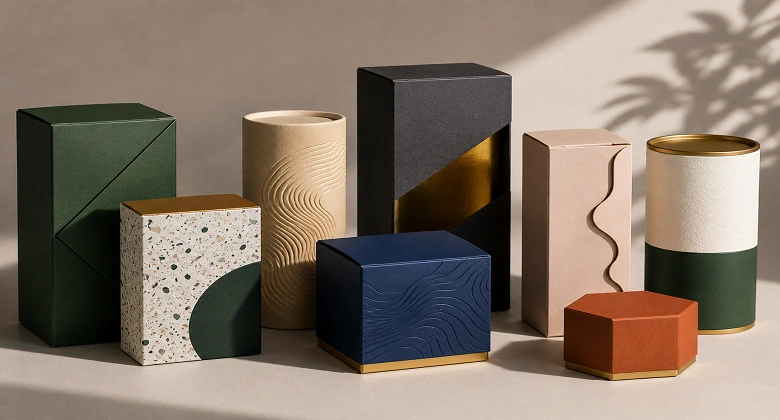
Retail shelves are highly competitive, especially in the beauty industry where shoppers are exposed to hundreds of products at once. Your packaging only has a few seconds to grab attention, so clarity and strong visual impact are essential.
Clear product identification is the first priority. Customers should instantly understand what the product is, who it’s for, and why it stands out. If this message isn’t obvious at a glance, they’ll likely move on.
A strong visual hierarchy helps guide the eye in the right order, starting with the brand name, then the product name, followed by key benefits and supporting details. This makes the design easier to read and more effective in communicating value quickly.
Color also plays a major role in perception. Green often signals natural ingredients, black suggests luxury, white communicates cleanliness, and pink is commonly associated with beauty and femininity. When used intentionally, color becomes a powerful tool to attract the right audience and strengthen brand positioning.
Print Finishes That Increase Perceived Product Value
The most successful cosmetic brands understand that packaging isn’t only visual. Finishes like foil stamping, embossing, and soft-touch coating create a tactile experience customers associate with premium quality.
It’s tactile.
Customers physically interact with packaging before using the product.
Strategic finishing techniques can dramatically increase perceived value.
Foil Stamping
Creates metallic highlights that attract attention.
Popular for premium skincare products.
Spot UV
Adds gloss to selected areas.
Excellent for logos and key design elements.
Embossing
Raises specific areas above the surface.
Adds texture and sophistication.
Debossing
Creates recessed impressions.
Often used in luxury packaging.
Soft-Touch Lamination
Provides a velvety texture that customers instinctively associate with premium quality.
These enhancements can significantly elevate brand perception without dramatically increasing production costs.
The Complete Guide to Print-Ready Packaging Files
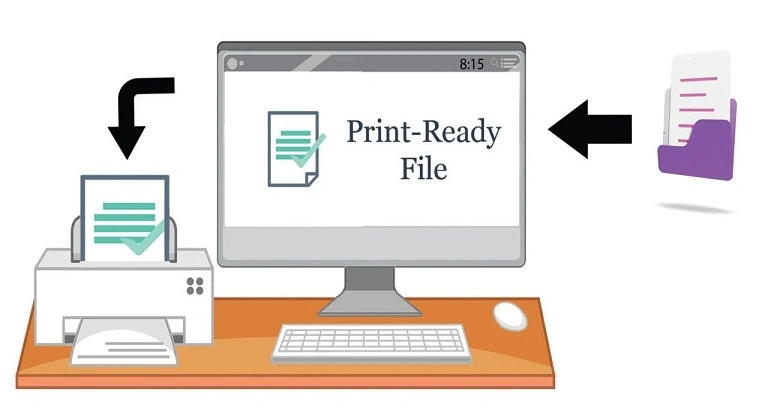
This is where many cosmetic brands struggle.
You may have beautiful artwork.
You may even have approved mockups.
But if your files aren’t production-ready, manufacturing cannot begin.
Understanding print requirements is essential.
Use CMYK Instead of RGB
Design software typically defaults to RGB color mode.
RGB is intended for screens.
Commercial printing uses CMYK.
Failing to convert colors properly can result in major color shifts during production.
This is particularly important for cosmetic brands that rely heavily on color consistency.
Create Proper Bleeds
A bleed extends artwork beyond the final trim edge.
Without bleed settings, minor production shifts can create unwanted white borders.
Most packaging printers require approximately 3mm of bleed around the artwork.
Always verify requirements with your supplier.
Use High-Resolution Images
Images should typically be at least 300 DPI.
Low-resolution artwork may appear pixelated or blurry when printed.
Luxury packaging demands exceptional print quality.
Convert Fonts to Outlines
If your printer doesn’t have your exact fonts installed, substitutions can occur.
Converting text to outlines eliminates this risk.
Use Vector Graphics Whenever Possible
Logos and icons should remain vector-based.
Vector artwork can scale infinitely without losing quality.
Raster images cannot.
Organize Layers Properly
A clean file structure helps production teams review artwork efficiently.
Organized files reduce revisions and speed up approvals.
Common Packaging Design Mistakes That Cost Beauty Brands Money
Packaging errors can become expensive quickly.
Here are some of the most common mistakes.
1. Ignoring Dielines
Designing without structural constraints often leads to misaligned graphics.
2. Using Low-Quality Artwork
Poor image quality damages brand perception.
3. Overcrowding Information
Too much content reduces readability.
4. Inconsistent Branding
Visual inconsistency weakens recognition.
5. Missing Regulatory Details
Compliance issues can delay product launches.
6. Approving Designs Without Physical Proofs
Digital mockups rarely tell the entire story.
Always review production samples when possible.
Avoiding these mistakes starts with working with a supplier who reviews your files before production. Make A Boxes provides free file checks and proof approval with every order, so nothing goes to print until it’s right. Get a free quote today.
How to Design Custom Cosmetic Box Packaging Without Production Headaches
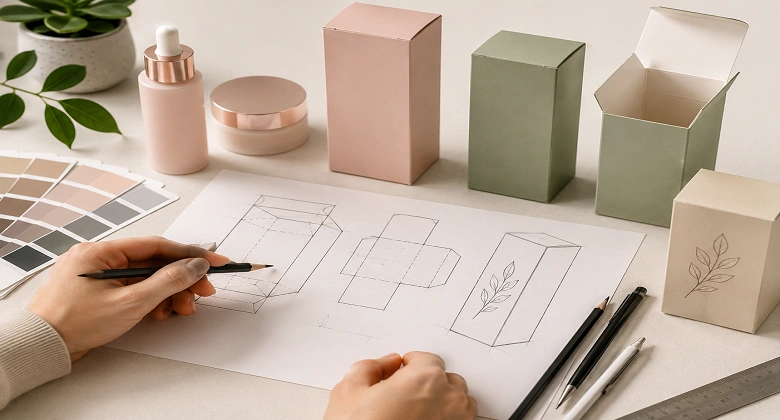
If you’re trying to understand how to design custom cosmetic box packaging successfully, the key insight is that it’s not just about hiring a designer to create something visually appealing. Great packaging happens when branding and manufacturing are developed together from the very beginning. Without that connection, even the most beautiful design can run into production issues later.
The most successful packaging projects follow a structured, step-by-step process:
- Define a clear brand strategy so you understand your positioning, audience, and visual direction.
- Create strong brand guidelines to ensure consistency across every product.
- Develop structural concepts that determine how the packaging will physically function.
- Build accurate dielines, which act as the technical blueprint for production.
- Design artwork that fits the structure and aligns with brand identity.
- Prepare print-ready files that meet manufacturer specifications.
- Produce prototypes to evaluate real-world look and feel.
- Review printed proofs carefully to catch errors before mass production.
- Approve production only after confirming everything is correct.
Skipping any of these stages often leads to avoidable delays, costly reprints, and inconsistent results.
Brands that scale successfully tend to treat packaging as a long-term investment rather than a one-time expense. This mindset allows them to build stronger systems that support growth instead of creating bottlenecks.
What Professional Packaging Designers Actually Deliver
Many first-time founders assume that hiring a packaging designer simply means receiving artwork for a box. In reality, professional packaging design is a much more comprehensive service that blends creativity with technical expertise and production knowledge.
A full packaging design project often includes:
- Brand consultation to align packaging with business goals and target audience
- Structural recommendations to ensure the packaging is functional and manufacturable
- Production planning to avoid printing and assembly issues
- Material selection to balance durability, cost, and premium feel
- Artwork development tailored to brand identity and product positioning
- Regulatory compliance support for required cosmetic labeling information
- Supplier communication to reduce misinterpretation during production
- Print-ready file preparation that meets industry standards (CMYK, bleed, vector setup)
In more advanced projects, designers may also develop a dieline template beauty box structure specifically engineered for product dimensions, weight, and unboxing experience. This structural precision is often what separates standard packaging from premium, retail-ready packaging.
This level of expertise not only improves the final outcome but also saves brands significant money by preventing production errors, reducing revisions, and avoiding costly reprints.
The Future of Cosmetic Packaging
Consumer expectations in the beauty industry continue to evolve rapidly. Today’s customers expect more than just attractive packaging, they want products that align with their values and lifestyle. This includes packaging that is sustainable, functional, visually appealing, easy to recycle, optimized for social media sharing, and capable of delivering a premium unboxing experience.
As competition increases, brands that successfully balance aesthetics with usability and environmental responsibility are the ones gaining stronger market share and long-term customer loyalty.
The future of cosmetic packaging belongs to companies that no longer view packaging as a simple container, but instead treat it as a strategic brand asset that directly influences perception, experience, and sales performance.
Sums Up
Cosmetic packaging is one of the few marketing investments that influences every stage of the customer journey.
It attracts attention on shelves, builds trust during purchase decisions, enhances unboxing experiences, and reinforces brand loyalty long after the product has been used.
Yet many first-time beauty brands underestimate the technical side of packaging design.
Understanding dielines, developing clear brand guidelines, selecting appropriate materials, and preparing accurate print-ready files can eliminate costly production mistakes and accelerate your path to market.
The truth is simple: beautiful packaging that cannot be manufactured is just artwork.
Successful cosmetic packaging combines creativity, strategy, engineering, and production expertise into one seamless experience.
Whether you’re launching your first skincare product or expanding an established beauty line, investing in professional packaging design ensures your products look exceptional, print correctly, and ultimately sell more effectively.
Ready to bring your vision to life? Explore our full range of custom cosmetic boxes built for beauty brands.
Frequently Asked Questions
You typically need a print-ready PDF (CMYK), vector artwork (AI/EPS), outlined fonts, proper bleed setup, and embedded images at 300 DPI. Most printers also require a dieline file to ensure correct folding and cutting.
A dieline is a flat technical template that shows where a packaging box will be cut, folded, and glued. It acts as the blueprint for producing your cosmetic box accurately.
Files are often rejected due to wrong color mode (RGB instead of CMYK), missing bleed, low-resolution images, incorrect dieline usage, or unoutlined fonts that cause compatibility issues during printing.
You can enhance perceived value using finishes like foil stamping, embossing, spot UV, and soft-touch coating. Strong brand consistency and minimal, clean layouts also improve premium appeal.
Not always, but professional help reduces costly mistakes. Packaging experts ensure dielines, print specs, branding, and compliance are correct before production, saving time and reprints.