Check Fabric Contact Points
Review where the garment meets tabs, seams, window edges, and supporting cards. Keep loading and removal straightforward, particularly for fine or open-knit fabrics.

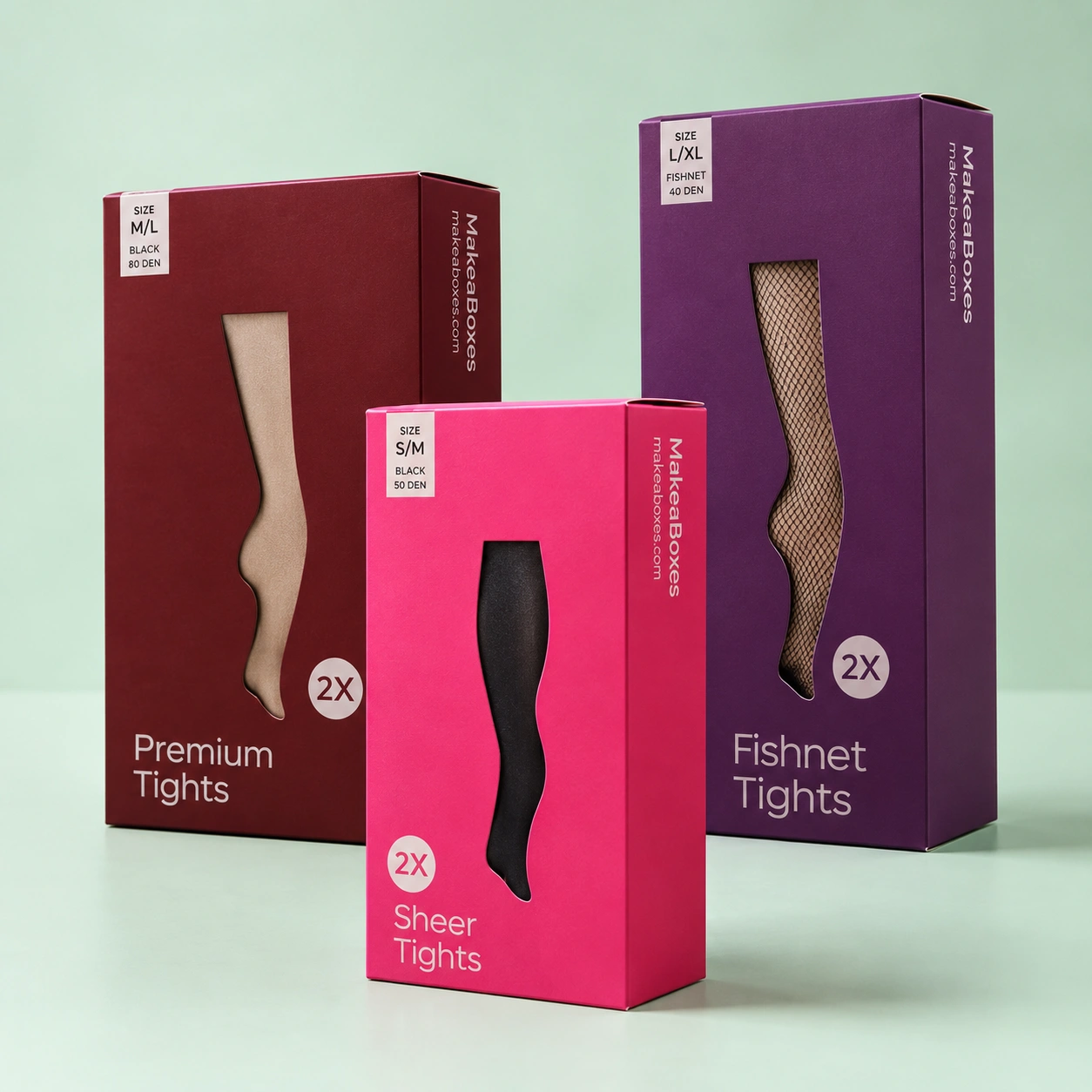

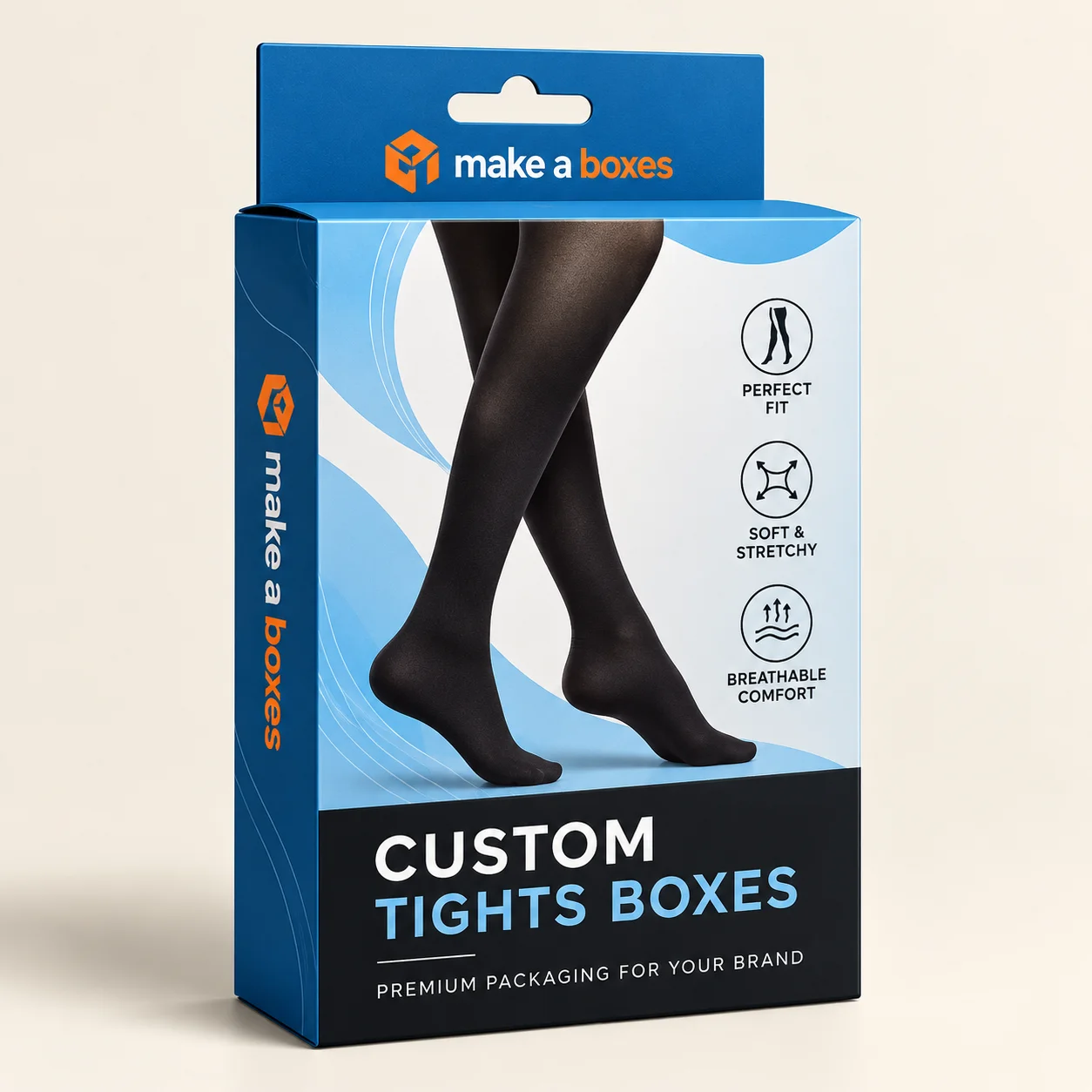
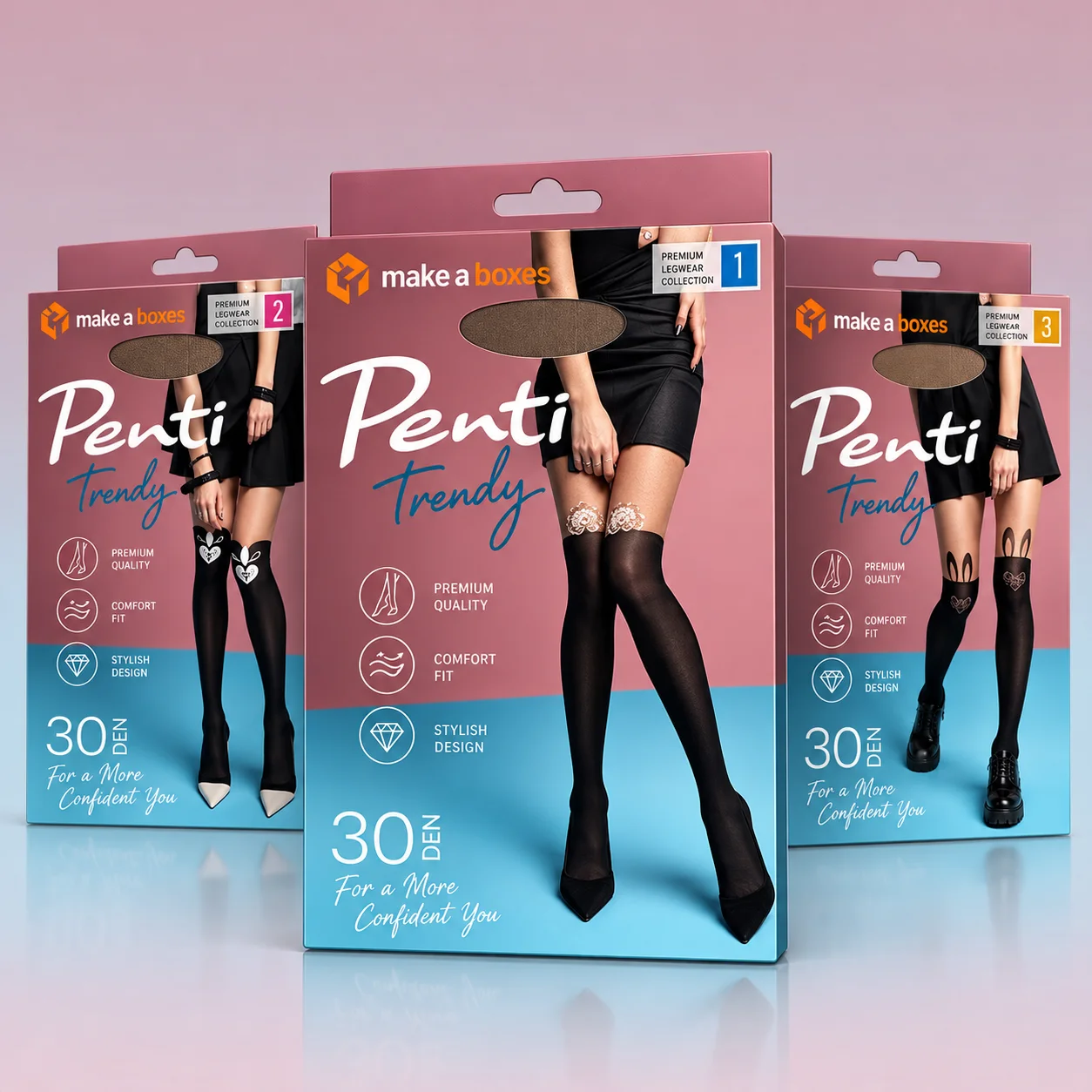


Fold the garment the way it will be packed, with tissue, tags and any accessories. The usable interior should hold that stack without crushing the fabric or leaving it loose.

A box for a shop counter, a gift and a parcel insert each do a different job. Choose the structure and closure for the main use, and check that it closes flat with everything inside.

Put your logo and key information on the panel customers see first. Check the artwork on an assembled box, since folds and edges can change how a flat layout reads.

Tights packaging holds a folded garment together with the information customers need to select it. A well-planned pack gives your brand a recognizable appearance while making product variations easy to identify.
The right dimensions depend on the finished bundle. Fine sheer tights, textured designs, and heavier opaque styles may occupy different amounts of space. Establish a consistent folding method, then measure representative products with their supporting cards and wrapping included.
Tights packaging boxes can provide enclosed panels for branding, product imagery, and supporting information. A sleeve offers a different balance of coverage and visibility, while a printed card may form part of a pack with a separate inner covering. Choose the format according to how the product will be displayed, handled, and packed.
For delicate fabric, review the surfaces and edges the garment will contact. Loading should not require dragging the tights across exposed tabs, rough cut edges, or adhesive areas. Where inner wrapping or a supporting card is used, assess it with the actual product rather than assuming the outer carton alone addresses snagging concerns.
Custom tights boxes also need a clear information layout. Size and shade should be easy to locate across the range. Where relevant, include the approved denier, pattern, finish, and care details without crowding the main panel. Product imagery should represent the correct variant rather than serving as a generic decoration.
If shade visibility is important, a window can be considered. Its position should reveal a useful section of the product, not a tag or hidden fold. Specify whether the opening is an exposed cutout or includes a clear film, as those constructions provide different levels of coverage.
Custom printed tights packaging can connect seasonal releases through consistent typography, logo placement, and panel organization. Use variant labels or separate artwork where needed, and check that every printed version matches the product it will contain.
A retail pack is not automatically suitable for parcel delivery. For online orders, review the complete delivery arrangement and consider our custom shipping boxes when an outer carton is needed.
Define the complete pack before finalizing dimensions and artwork.


Send measurements, photos and packed weight. Explain whether the box is for store display, gifting or packing inside another container.

Compare box styles by fit, storage space, packing speed and the way customers should open the box.

Review stock for stiffness, folding, appearance and print requirements. Confirm how the material will hold up across folds and closures.

Supply your logo, graphics and product text. Arrange the artwork on the dieline with the main display area, seam and folds clearly marked.

Approve the dimensions and artwork. Where needed, check an assembled sample with the actual product to assess loading, closure and presentation.

Finalize the quantity, artwork versions, finishing, packing arrangement and delivery requirements before authorizing production.
Review where the garment meets tabs, seams, window edges, and supporting cards. Keep loading and removal straightforward, particularly for fine or open-knit fabrics.
Closely related shades can be difficult to distinguish through artwork alone. Pair color references with clear shade names or codes and keep size information easy to locate.
A front panel should remain readable in its intended display position. Check whether neighboring packs, shelf edges, or hanging fixtures could obscure important details.
When ordering tights boxes wholesale, keep a clear record of dimensions, material, structure, artwork revision, and quantity for each version.
Choose according to coverage, display method, and the space needed for product information. An enclosed box offers more covered panels, while sleeves and cards may leave parts of the product visible or rely on separate inner wrapping. Compare the complete formats with your actual tights.
Sometimes, but fabric thickness, garment size, and folding method can change the packed dimensions. Check representative styles before confirming a common size, particularly when the range includes both lightweight and heavier products.
A window can be considered where it suits the structure. Identify what customers should see and whether you need an open cutout or a film-covered opening. Check its position using the intended product fold.
Include each artwork version and its quantity in your brief. A common layout can carry different size, shade, style, and barcode information. Review every version against the corresponding product before approval.
Provide packed dimensions, product types, pack count, preferred format, display requirements, quantity per version, printing needs, and delivery location. Include supporting cards, wrapping, windows, hanging features, and any sampling requirements.