
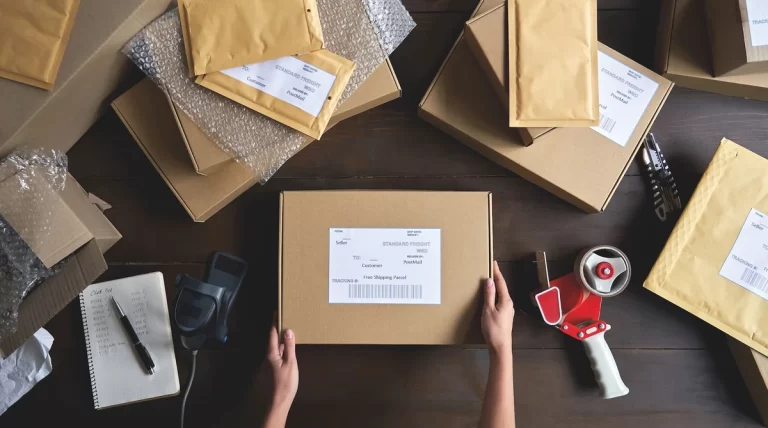
Let’s be honest, most ecommerce brands don’t think deeply about packaging until something goes wrong.
A product arrives damaged. Shipping costs spike. Customers don’t come back. Or worse… no one remembers your brand after delivery.
That’s when it hits: packaging isn’t just a box. It’s a silent salesperson, a logistics tool, and a brand experience, all rolled into one.
Today, successful brands are treating ecommerce packaging solutions as a growth lever, not just an operational cost. And the difference shows, in margins, retention, and even social proof.
Let’s go deeper into what actually works, what doesn’t, and how you can build packaging that scales with your business.
The Real Role of Packaging in Ecommerce
At surface level, packaging protects your product. But in reality, it operates across three layers:
1. Operational Efficiency
Your packaging directly affects:
- Shipping costs (dimensional weight pricing is brutal if you get this wrong)
- Warehouse speed (easy-to-pack designs save time)
- Damage rates (returns eat into profit fast)
For example, reducing just 1 inch in box dimensions across thousands of shipments can cut logistics costs significantly over time.
2. Customer Psychology
Customers subconsciously judge:
- Product value based on packaging quality
- Brand professionalism
- Whether your brand feels “premium” or “cheap”
A plain brown box vs. a thoughtfully branded package creates two completely different emotional responses.
3. Marketing & Retention
Packaging is one of the few marketing touchpoints you fully control.
Unlike ads or social media, no algorithm decides whether your customer sees your message, they’re holding it in their hands.
That’s why investing in custom packaging for ecommerce isn’t about aesthetics alone, it’s about controlling perception.
Affordable Custom Packaging for Ecommerce Businesses
There’s a common belief in ecommerce that custom packaging is only for big, established brands with deep pockets. But that idea is outdated. Thanks to digital printing and flexible manufacturing, affordable custom packaging for ecommerce is now within reach for startups and growing businesses. You don’t need to invest heavily to create packaging that feels intentional and on-brand, you just need to make smarter choices.
Oversized Packaging: The Hidden Cost Driver
One of the most common ways brands lose money is through oversized packaging. Many businesses rely on a single box size for all orders, assuming it simplifies operations. While it might seem efficient, it actually increases costs across the board. Larger boxes mean higher shipping fees due to dimensional weight, more filler material to secure products, and a less satisfying customer experience because the packaging feels excessive.
Customers today are more conscious about waste, and receiving a big box for a small item can leave a negative impression. By simply adjusting box sizes to better fit your products, brands can reduce shipping costs by 15–30% in some cases. It’s a small operational change that delivers a significant financial impact over time.
Over-Designing Too Early
Another mistake many ecommerce brands make is investing heavily in premium packaging features too soon. Full-color printing, embossing, foil stamping, and magnetic closures can certainly elevate the look of your packaging, but they’re not essential when you’re just starting out.
A lean approach often works better in the early stages. Simple kraft boxes paired with branded stickers, custom tape, or minimal inserts can still create a cohesive and memorable unboxing experience. These elements give your packaging personality without putting unnecessary pressure on your budget. As your brand grows and margins improve, you can gradually upgrade to more premium designs.
Ignoring Material Strategy
Material selection is another area where costs can quietly add up. Not every product needs heavy-duty packaging, yet many brands default to stronger, and more expensive, materials just to be safe. This often leads to overspending without adding real value.
The key is to match the packaging material to the product itself. Fragile items may require corrugated double-wall boxes for extra protection, while apparel can be shipped efficiently using poly mailers or paper-based alternatives. Subscription boxes, which are more experience-driven, might benefit from rigid or semi-rigid packaging to enhance presentation.
When you align your material choices with your product needs, you avoid paying for unnecessary durability. This not only reduces costs but also helps create a more intentional and efficient packaging system overall.
Bulk Custom Boxes for Ecommerce Shipping: Scaling Smart
As your ecommerce business starts growing, packaging decisions naturally become more complex, and more important. What worked when you were shipping a few orders a day might not hold up when you’re fulfilling hundreds or even thousands. At this stage, packaging isn’t just about presentation anymore; it becomes a key part of your cost structure, operational efficiency, and scalability.
Bulk ordering often seems like the obvious next step. On paper, it’s simple: order more units, reduce your per-box cost, and improve margins. And while that’s true to an extent, the reality is a bit more nuanced. Without proper planning, bulk packaging can actually create inefficiencies, tie up cash flow, and limit your ability to adapt as your product line evolves.
The Economics of Bulk Packaging
Ordering in bulk can significantly lower your per-unit cost, often by 20–50%, depending on the volume and supplier. For growing brands, this kind of cost reduction can make a noticeable difference, especially when packaging is a recurring expense tied to every order you ship.
However, the mistake many brands make at this stage is focusing only on cost savings while overlooking flexibility. Locking yourself into one packaging design or size might seem efficient today, but it can quickly become a problem if your product range expands, your branding evolves, or your shipping needs change. What initially feels like a cost-saving decision can turn into wasted inventory sitting in storage.
Standardized Outer Boxes: Simplifying Operations
A smarter approach is to standardize your outer packaging. Instead of creating a unique box for every product, focus on developing two or three core box sizes that can accommodate the majority of your SKUs. This simplifies your inventory, speeds up packing operations, and reduces decision-making on the warehouse floor.
Standardization also makes forecasting easier. When you’re dealing with fewer packaging variations, it’s much simpler to estimate how much stock you need and when to reorder. Over time, this consistency improves efficiency and reduces the risk of running out of essential packaging materials during high-demand periods.
Custom Inserts for Differentiation
While standard boxes handle efficiency, customization can still happen inside the package. This is where inserts, dividers, and sleeves come into play. Instead of investing in multiple box designs, you can use internal elements to tailor the packaging for different products.
For example, a single box size can be adapted to fit:
- Fragile items using protective inserts
- Multi-product bundles using dividers
- Premium items using branded sleeves or wraps
This approach allows you to maintain a consistent outer appearance while still delivering a customized and well-organized unboxing experience. It also gives you the flexibility to update or switch inserts without committing to entirely new packaging runs.
Seasonal Packaging Planning: Creating Impact Without Waste
Another important aspect of scaling packaging is planning for seasonal demand. Campaigns around events like Ramadan, Black Friday, or year-end sales are great opportunities to introduce limited-edition packaging that feels timely and exciting.
But here’s where many brands go wrong, they overproduce.
Seasonal packaging should be treated differently from your core packaging. Instead of ordering in bulk, it’s smarter to produce smaller, controlled batches. This allows you to test designs, create a sense of exclusivity, and avoid ending up with outdated packaging once the campaign ends.
Limited-edition packaging, when done right, can increase perceived value and encourage repeat purchases. Customers often associate these small details with a brand that pays attention and cares about the experience.
Finding the Right Balance Between Cost and Flexibility
At its core, scaling your packaging strategy is about balance. Yes, bulk ordering helps reduce costs, but flexibility ensures your operations stay adaptable as your business grows. The most successful ecommerce brands don’t just think in terms of “cheaper packaging”; they think in systems.
They build packaging setups that:
- Support growth without constant redesign
- Allow room for product expansion
- Maintain a consistent brand identity
- Adapt to seasonal and promotional needs
When you approach bulk packaging with this mindset, it stops being just a cost-saving tactic and becomes a long-term operational advantage.
Order Custom Branded Packaging Boxes Online: What Actually Matters
Ordering packaging online has become easier than ever, but the reality is that not all suppliers deliver the same level of quality or reliability. Choosing the right ecommerce packaging suppliers can have a direct impact on your profit margins, delivery timelines, and overall customer experience. A poor supplier choice can lead to delayed shipments, inconsistent branding, and even product damage, while a reliable partner can strengthen your entire fulfillment process.
When evaluating suppliers, price alone should never be the deciding factor. One of the most important considerations is Minimum Order Quantity (MOQ). Some suppliers require large upfront volumes, which can be risky for growing brands. It’s always better to work with partners that offer low MOQ options for testing, along with scalable pricing tiers that allow you to increase volume as your business grows. This gives you flexibility without locking up unnecessary capital.
Another critical factor is prototyping and sampling. Many brands make the mistake of approving packaging based on digital mockups, only to discover issues later. A design that looks perfect on screen may feel flimsy in real life, have poor print quality, or fail to fit the product correctly. That’s why physical sampling is essential before committing to bulk production.
Lead time is another area that directly affects your operations. Delays in production or shipping can disrupt your entire supply chain, especially during peak seasons. Reliable suppliers provide clear timelines along with buffer estimates so you can plan inventory without stress or last-minute shortages.
Beyond logistics, consultation support is often underestimated. A good supplier offering ecommerce packaging consultation can help you reduce costs, improve structural design, and optimize packaging for shipping efficiency. In many cases, this guidance adds more long-term value than the packaging itself because it helps you avoid costly mistakes and build a more efficient system from the start.
Sustainability: From Trend to Expectation
Sustainability in packaging is no longer optional, it has become an expectation. Customers today are far more aware of environmental impact, and they actively notice how brands handle packaging waste. It’s not just about labeling something as “eco-friendly.” People can easily recognize excessive packaging, non-recyclable materials, and plastic-heavy designs, and these factors often influence their perception of your brand.
Even small improvements can make a meaningful difference. Switching to recyclable mailers, reducing unnecessary fillers, or adopting paper-based packaging can significantly improve how customers view your brand. These changes signal responsibility and care, which strengthens trust over time.
From a business perspective, sustainable packaging also makes sense financially. While it may require some initial adjustment, it can reduce long-term material costs, improve operational efficiency, and increase customer loyalty. Brands that clearly communicate their sustainability efforts often build stronger emotional connections with their audience, which directly contributes to repeat purchases and long-term retention.
Designing a Packaging Experience That Converts

Packaging is not just about protection, it’s about experience. What happens after the customer opens the box is just as important as the product inside. This moment is where brand perception is truly formed.
A high-converting packaging experience starts with the first layer impact. When a customer opens the box, the presentation should feel clean, organized, and intentional. There should be no clutter or confusion, just a smooth, visually appealing reveal that immediately creates a premium impression.
Brand messaging also plays a powerful role. Simple additions like thank-you notes, short brand story inserts, or QR codes linking to your website or social media can significantly enhance engagement. These elements make the experience feel more personal and help customers connect with your brand beyond the purchase.
Adding small surprise elements is another effective strategy. Stickers, sample products, or discount codes for future purchases may seem minor, but they often have a strong psychological impact. These touches increase the likelihood of repeat orders and encourage customers to share their experience with others.
Even practical elements like easy returns contribute to a better experience. Packaging that is reusable or includes clear return instructions reduces friction and builds trust. Customers feel more confident buying again when they know the process is simple and hassle-free.
Common Mistakes That Cost Brands Real Money
Many ecommerce brands unknowingly lose money due to avoidable packaging mistakes. One of the most common is treating packaging as an afterthought. When packaging is not strategically planned, it often leads to higher costs, weaker branding, and missed opportunities to create a strong customer experience.
Another major mistake is always choosing the cheapest option. While cost-saving is important, extremely low-cost packaging often results in product damage, poor unboxing experiences, and negative reviews, all of which end up costing more in the long run.
Lack of testing is also a frequent issue. Packaging should always be tested under real conditions, including drop tests, compression tests, and actual shipping simulations. Without testing, brands risk discovering flaws only after customers experience them, which can damage reputation and increase returns.
Finally, ignoring customer feedback can be a costly oversight. Customers often provide valuable insights about packaging usability, waste perception, and product protection. Paying attention to this feedback and continuously improving your packaging system helps ensure long-term success.
How to Build Your Packaging Strategy (Step-by-Step)
If you want a practical approach, here’s how to start:
Step 1: Analyze Your Current Packaging
Look at:
- Costs per shipment
- Damage rates
- Customer feedback
Step 2: Define Priorities
Decide what matters most:
- Cost reduction
- Branding
- Sustainability
Step 3: Test Before Scaling
- Order samples. Run real-world tests.
Step 4: Get Custom Packaging Quote
- Compare multiple vendors and evaluate total cost, not just per unit.
Step 5: Optimize Over Time
- Packaging isn’t “set and forget.”
Continuously improve as your business grows.
Final Thoughts
The brands that win in ecommerce don’t just ship products; they deliver experiences.
Great packaging:
- Reduces costs behind the scenes
- Builds trust with customers
- Creates memorable moments
And most importantly, it makes your brand feel intentional.
Even if you’re just starting or scaling fast, investing in smarter ecommerce packaging solutions can unlock real, measurable growth.
Because at the end of the day, your packaging is the one piece of your brand your customer can actually hold.